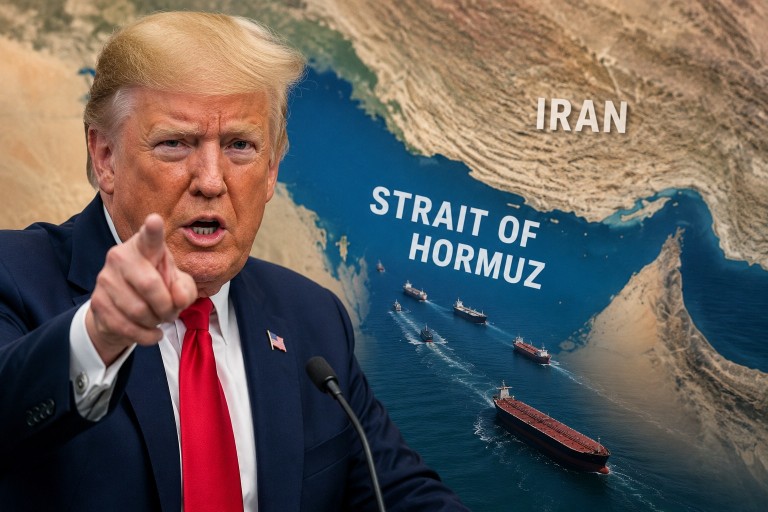
Amid ongoing tensions with Iran, US President Donald Trump has issued a bold statement, suggesting that the Strait of Hormuz could soon be declared “a territory of the United States.” This declaration came during a speech in New York on Friday, where Trump indicated that the US might make this move “pretty soon” following a claimed victory over Iran. He asserted that the US maintains control over this crucial waterway through a blockade. However, it remains uncertain whether these remarks signal an official shift in US foreign policy or if they are primarily a political maneuver.
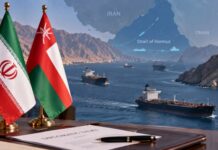
The Strait of Hormuz holds significant global importance as it serves as a vital shipping lane, with approximately 20% of the world’s seaborne oil passing through it. Positioned between Iran and Oman, this strategic channel has faced substantial disruptions since military operations led by the US and Israel commenced against Iran. The ongoing conflict has led to its partial closure, complicating international trade and energy distribution.
Iran has firmly opposed Trump’s threats, with Deputy Foreign Minister Kazem Gharibabadi emphasizing Tehran’s resolve not to succumb to US pressure. He reiterated that the authority to decide the status of the strait rests with Iran. Iranian Foreign Minister Abbas Araqchi also highlighted that Tehran has yet to make a decision on resuming formal negotiations with Washington, noting that the messages exchanged through intermediaries like Qatar and Pakistan do not amount to official discussions.
In order to reopen the strait for shipping, Iran has set forth several conditions, including compensation for damages incurred during the conflict, the removal of sanctions, and the release of frozen Iranian assets. The ongoing standoff has contributed to a spike in fuel prices, which President Trump defended by stating that the higher costs are a necessary measure to prevent Iran from acquiring nuclear weapons.
The unresolved situation surrounding the Strait of Hormuz continues to pose challenges for global energy supplies, raising alarms over potential economic repercussions worldwide. As the impasse drags on, concerns mount about the broader implications of the conflict on international markets and consumer prices.