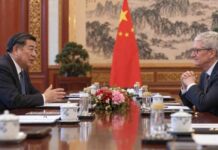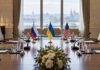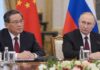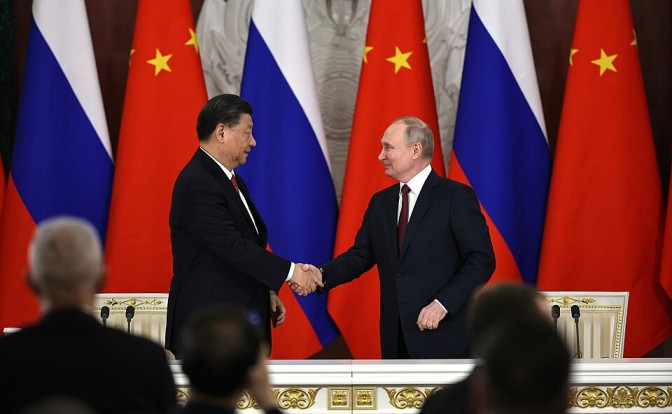
In a move signaling deeper ties amid a shifting global landscape, Chinese President Xi Jinping and Russian President Vladimir Putin have agreed to extend the China-Russia Treaty of Good-Neighborliness and Friendly Cooperation. This decision came after a series of discussions held at Beijing’s Great Hall of the People during Putin’s two-day state visit to China. The leaders committed to enhancing political trust, strategic coordination, and practical cooperation between their nations. As part of their agreement, Xi and Putin signed a joint statement aimed at boosting comprehensive strategic coordination and fostering good-neighborly and friendly cooperation. They also witnessed the signing of 20 cooperation documents covering areas such as economy, trade, education, and science and technology.
During their joint media appearance, Xi noted that this year marks both the 30th anniversary of the China-Russia strategic partnership and the 25th anniversary of the treaty’s initial signing. These milestones, he said, have seen China-Russia relations reach unprecedented heights, serving as a model for new major-country relations. Xi emphasized that the treaty has consistently adhered to principles of non-alliance, non-confrontation, and non-targeting of third parties, fostering mutual respect and win-win cooperation. He called for continued support on each other’s core interests, maintaining close strategic exchanges, and strengthening political mutual trust.
Trade and economic collaboration between China and Russia have flourished in recent years, with bilateral trade surpassing $200 billion for three consecutive years. In early 2026, trade between the two nations increased by nearly 20 percent, according to customs data. Xi urged alignment between China’s 15th Five-Year Plan (2026-30) and Russia’s development strategy through 2030, suggesting that such coordination would elevate mutually beneficial cooperation and support the development and revitalization of both countries.
On the global stage, Xi and Putin underscored the importance of advocating for a multipolar world and new international relations. Xi highlighted the dangers of unilateralism and hegemonism, warning of a potential return to the “law of the jungle.” As permanent UN Security Council members, both countries are urged to uphold UN authority, international fairness, and oppose unilateral bullying. A shared commitment against any acts reviving fascism and militarism was emphasized, with a call for a more just and equitable global governance system. Putin, echoing these sentiments, expressed confidence in the future of bilateral relations and highlighted Russia’s readiness to collaborate with China on multiple international platforms, including the Shanghai Cooperation Organization and BRICS.
In addition to these strategic discussions, both nations announced an extension of their visa-free policies until the end of 2027, facilitating greater people-to-people exchanges. The leaders also addressed pressing international issues, such as the Middle East conflict, where Xi stressed the urgency of ending hostilities to stabilize energy supplies and global trade. The state visit concluded with a welcoming banquet hosted by Xi for Putin, further solidifying the enduring ties between China and Russia.