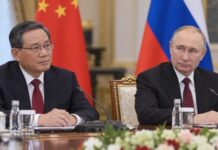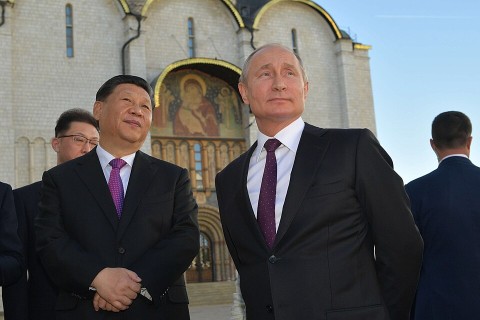
In a notable diplomatic exchange, Chinese President Xi Jinping and Russian President Vladimir Putin sent each other congratulatory letters on Sunday, just days before Putin’s anticipated visit to Beijing. This comes shortly after former U.S. President Donald Trump’s high-profile summit in China. The correspondence underscores the strengthening ties between China and Russia, which have solidified over the past three decades, as highlighted by Xi in remarks reported by Chinese state media.
Putin’s arrival in China, scheduled for Tuesday evening, will be followed by a meeting with Xi on Wednesday morning, according to Kremlin aide Yuri Ushakov. The agenda for the discussions includes various aspects of bilateral relations, with significant attention on the proposed Power of Siberia 2 gas pipeline. The timing of these visits has captured global attention, as it is unusual for a nation to host U.S. and Russian leaders consecutively in such a short span, a rarity since the end of the Cold War.
The deepening alliance between China and Russia has raised concerns in Western capitals, particularly following Russia’s full-scale invasion of Ukraine in 2022. Western diplomats and analysts suggest that China’s economic and diplomatic support has been crucial for Russia during the ongoing conflict. The two nations have dramatically increased their bilateral trade, with China purchasing over a quarter of Russia’s exports, including large quantities of crude oil, which has provided Moscow significant revenue amid the Ukraine war. Since the conflict began, China has acquired more than $367 billion in Russian fossil fuels, according to the Centre for Research on Energy and Clean Air. These purchases have been vital for China’s energy security, especially after disruptions in the Middle East affected oil shipments through the Strait of Hormuz.
While Trump’s recent talks with Xi did not prominently feature discussions on the Ukraine conflict or the Sino-Russian relationship, they focused more on trade issues, the situation in Taiwan, and the Middle East crisis. Trump mentioned that China agreed with reopening the Strait of Hormuz, while Xi cautioned him on the potential consequences of mishandling the Taiwan issue. Trump has yet to make a decision regarding a significant arms deal with Taiwan, a move that Beijing strongly opposes as it aims to exert control over the autonomous island.
Analysts like Joseph Webster from the Atlantic Council speculate that Taiwan could be a crucial underlying theme in the upcoming Xi-Putin meeting. Beijing might seek additional fossil fuel agreements with Moscow to secure energy supplies in case of future conflicts. Expanding the capacity of Russian oil pipelines to China, such as the Power of Siberia 2, would significantly bolster Beijing’s energy security amid potential tensions involving Taiwan, Webster noted. Russia has been advocating for the advancement of this pipeline project, which would considerably enhance the gas supply network between the two countries.