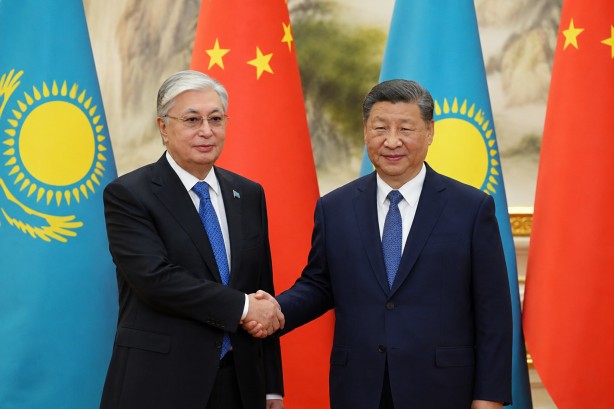
During the 2026 World Artificial Intelligence Conference held in Shanghai, Chinese President Xi Jinping met with Kazakhstan President Kassym-Jomart Tokayev to strengthen the strategic partnership between their nations. The two leaders discussed enhancing collaboration by syncing their development strategies and broadening cooperation in various sectors. President Xi emphasized the importance of working together in areas such as trade, cross-border e-commerce, energy, and transport. He further called for joint efforts in the digital economy, artificial intelligence, education, and healthcare.
President Xi also highlighted the need for cooperation on multilateral platforms, including the United Nations and the Shanghai Cooperation Organization, underscoring the significance of cultural and scientific exchanges. Meanwhile, Kazakhstan’s President Tokayev acknowledged the close ties with China, describing the nation as Kazakhstan’s most crucial foreign policy partner. He voiced his support for expanding cooperation in sectors like trade, investment, transportation, and agriculture, alongside energy initiatives and AI governance.
After the meeting, the leaders of both countries witnessed the signing of several agreements aimed at enhancing cooperation in key areas. These agreements covered fields such as trade, transport, finance, and media, marking a significant step forward in the bilateral relations between China and Kazakhstan. The solidification of these partnerships is expected to promote mutual growth and development.
The discussions and agreements reflect a mutual interest in leveraging technological advancements and fostering economic growth, a testament to the evolving dynamics of international relations in the region. Both countries seem poised to benefit from these strengthened ties, particularly in an era where artificial intelligence and digital economy hold significant potential for future development.
The meeting in Shanghai serves as a reminder of the strategic importance of such international partnerships, not only for the nations directly involved but also for the broader global community. By aligning their ambitions and resources, China and Kazakhstan aim to navigate the challenges and opportunities presented by the rapidly changing global landscape.