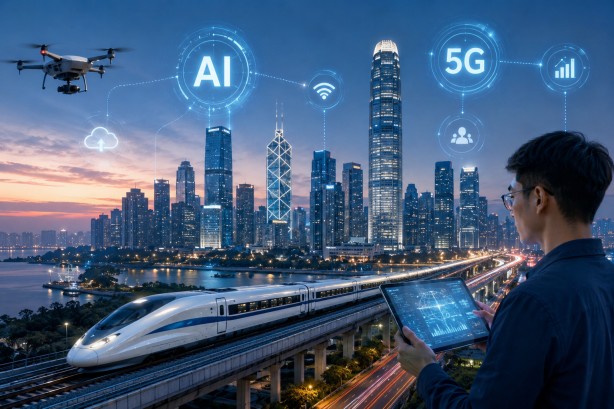
China is rapidly advancing its digital economy by enhancing the integration of artificial intelligence, digital infrastructure, and smart technologies across various sectors and public services. By 2025, the nation’s digital economy had surged to 49 trillion yuan ($7.22 trillion), accounting for approximately 35% of the country’s GDP. Furthermore, core digital industries contributed over 10.5% to the GDP, underscoring their growing significance in China’s economic landscape.
As part of its strategic vision outlined in the 15th Five-Year Plan for 2026–2030, China is focused on broadening the implementation of AI, bolstering data security measures, refining digital governance frameworks, and fostering international collaboration. This ambitious plan aims to harness the potential of digital innovations to drive sustained economic growth and improve societal well-being.
Urban centers like Beijing are at the forefront of this digital transformation, showcasing the practical benefits of technology-driven solutions. Initiatives such as internet hospitals exemplify how healthcare delivery can be revolutionized through digital means, while AI-powered traffic management systems are streamlining urban mobility. Additionally, shared medical imaging platforms and smart utility networks illustrate the substantial improvements in public services enabled by digital technologies.
The emphasis on digital development is not only a catalyst for economic expansion but also a means to enhance the quality of life for citizens. By leveraging cutting-edge technologies, China aims to create a more efficient, secure, and interconnected society. Through these efforts, the country seeks to solidify its position as a global leader in the digital domain, setting a benchmark for others to follow.