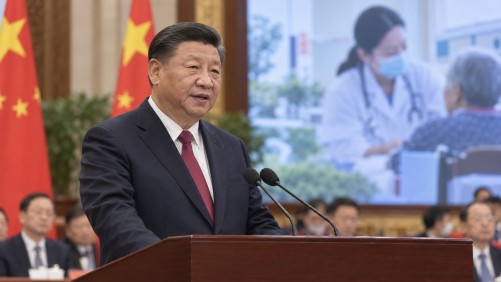
China is advancing its healthcare agenda through the Healthy China Initiative, aiming to enhance affordable healthcare access for its over 1.4 billion citizens. This initiative underscores the importance of reinforcing rural medical infrastructure, expanding health insurance coverage, and ensuring the availability of quality medical services across both urban and rural areas. President Xi Jinping has been vocal about the necessity of channeling more medical resources to community-level institutions, a sentiment he expressed during a visit to a township clinic in Jiangsu province in December 2014.
The initiative involves comprehensive reforms spanning hospital management, medical insurance, medicine supplies, and tiered medical services. The goal is to make sure that severe illnesses are treatable within provincial boundaries, common ailments within cities or counties, and routine health matters at local facilities. A significant milestone in this pursuit is the development of 125 national regional medical centers, many in central and western regions where medical resources are less advanced. Currently, over 90 percent of residents can reach medical services within 15 minutes, and primary-level institutions handle more than half of the nation’s medical visits.
Preventive healthcare is another crucial component, with specific attention to children and the elderly. Efforts to curb childhood myopia have successfully reduced the condition’s prevalence among students for five consecutive years, achieving a myopia rate of 49.9 percent in 2025, down from 53.6 percent in 2018. Additionally, China’s average life expectancy has risen to 79.25 years by 2025, with notable progress in controlling infectious and endemic diseases and reducing premature mortality from major chronic illnesses to 13.8 percent.
To support these healthcare improvements, the Chinese government is fostering medical technology and pharmaceutical innovations. Encouragement for digital healthcare, artificial intelligence applications, and the development of domestic medicines, vaccines, and diagnostic technologies is on the rise. In the first half of 2026 alone, China approved 38 innovative drugs, reflecting this focus. Traditional Chinese medicine continues to play a vital role, with modernization efforts and international cooperation expanding through overseas medical teams and public health initiatives.
Looking forward, China aims to establish a comprehensive healthcare system by 2035, aligned with its broader modernization goals. As the population ages and healthcare demands diversify, the government remains committed to enhancing service quality, affordability, and access nationwide.