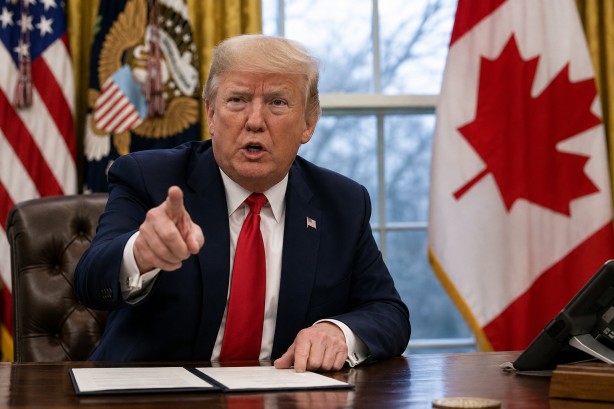
The trade standoff between the United States and Canada intensified after President Donald Trump voiced strong disapproval of Canada’s stance, following the collapse of trade talks between the two nations. This latest development in their ongoing trade conflict has seen the U.S. implement a 50% tariff on approximately $20 billion worth of Canadian imports, impacting a diverse range of goods.
In response to these measures, Canadian Prime Minister Mark Carney has vowed reciprocal action with equivalent tariffs, firmly stating that Canada refuses to comply with the terms laid out by Washington. Carney has characterized the situation as an outright trade war, accusing the U.S. of launching an economic assault on Canada. Meanwhile, U.S. Trade Representative Jamieson Greer justified the tariffs as a necessary move to safeguard American workers and domestic supply chains.
This escalating trade dispute has sparked concern among businesses and political figures on both sides of the border. Canadian business associations have expressed alarm over the potential for significant revenue losses for exporters and small enterprises. Similarly, U.S. lawmakers, particularly those representing border states, have warned that these tariffs could lead to increased costs for industries, farmers, and consumers alike.
Canada’s retaliatory tariffs, set to come into effect on September 8, will encompass a variety of goods, including steel, dairy products, appliances, and electronics. The back-and-forth economic measures between the two countries are contributing to a climate of uncertainty around the future of the US-Mexico-Canada trade agreement, a key framework that governs a substantial portion of North American trade.