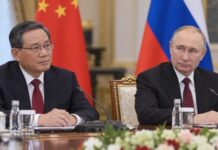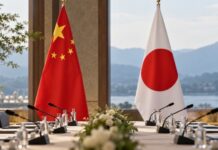
As the G7 summit unfolds in France, discussions have reignited regarding China’s potential inclusion in this assembly of nations that significantly influence the global economy and international affairs. Initially established in 1975, the G7 was formed by the world’s leading industrial democracies to tackle economic issues of the time, with China remaining outside the group due to its then-limited economic impact and minimal integration into global financial networks.
Fast forward to the present day, and China has emerged as the world’s second-largest economy, exerting substantial influence across international trade, technology, manufacturing, energy markets, and supply chains. This shift has led some to question whether global dialogues can truly be comprehensive without Beijing’s involvement, especially since China’s economic clout now surpasses that of several G7 members.
Despite its economic stature, the G7 continues to be perceived as a coalition of advanced democracies, with China’s political structure and stances on international matters posing challenges to its membership. During the summit, discussions are expected to focus heavily on China, addressing issues such as trade imbalances, industrial subsidies, supply chain security, access to critical minerals, and the effects of Chinese exports on domestic industries.
However, many policymakers emphasize the necessity of collaborating with China to effectively tackle global issues like climate change, economic stability, and technological progress. Chinese officials have previously advocated for increased international cooperation, cautioning against approaches that could exacerbate global divides.
Proponents of preserving the current G7 format argue that including China might complicate consensus-building due to contrasting political systems, strategic goals, and geopolitical interests. This debate underscores a broader challenge for the international community: adapting global institutions to reflect a world where economic power is increasingly dispersed beyond traditional Western alliances. While China does not have a seat at the summit, its role in the global economy remains a pivotal topic, underscoring the complexities of modern international relations.