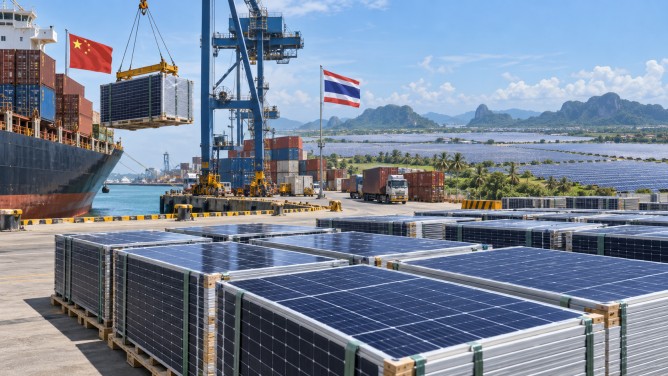
As Thailand accelerates its solar energy initiatives, the country has witnessed a remarkable increase in solar panel imports, with figures revealing an 88.7% surge in the first seven months of 2026. This growth is largely attributed to Thailand’s ambitious household solar installation program aimed at boosting clean energy usage and reducing electricity costs for millions of families.
According to data from Thailand’s Ministry of Commerce and Customs Department, the nation imported solar panels worth US$426.7 million during this period, with a staggering 99.3% of these imports originating from China. The Chinese import value alone escalated to US$423.9 million, marking a 107.1% rise compared to the same timeframe last year. In contrast, other suppliers like Singapore and Hong Kong contributed marginally, each accounting for about 0.3% of the total import value.
This spike in imports is in line with Thailand’s plan to implement a large-scale solar installation initiative. The government has proposed subsidies of approximately THB50,000 per household to encourage solar adoption, initially targeting one million homes with the potential to expand to 1.5 million. The program aims not only to cut down household energy expenses but also to foster the growth of a domestic clean-energy supply chain.
In addition to promoting solar installations, the Thai government is exploring avenues to enhance local solar manufacturing capabilities. This includes collaborating with the Ministry of Labour to provide training in solar panel assembly, installation, and maintenance. Moreover, discussions with the Board of Investment are underway to consider reducing duties on production inputs that are not available within the country, thereby supporting local manufacturers.
Thailand’s push towards solar energy reflects a broader strategy to transition to sustainable energy sources, reduce reliance on imported energy, and establish a robust domestic infrastructure for renewable energy. By focusing on both imports and local production, the country aims to create a balanced ecosystem that supports its environmental goals while boosting economic opportunities in the renewable energy sector.