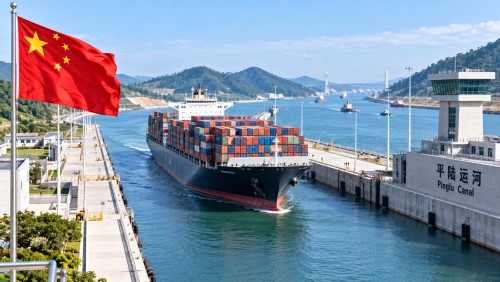
China’s ambitious infrastructure efforts continue to reshape regional trade dynamics with the opening of the Pinglu Canal in the Guangxi Zhuang Autonomous Region. This new waterway, part of the New International Land-Sea Trade Corridor, is set to enhance trade connectivity between southwest China and Southeast Asia, a region with which China enjoys robust economic ties.
The Pinglu Canal, stretching 134.2 kilometers, links Hengzhou to the Beibu Gulf, offering a more direct maritime route. This development is crucial for industries in southwest China, which have traditionally faced logistical challenges and higher costs in transporting goods to coastal ports. The canal, built at a cost of approximately 72.7 billion yuan ($10.75 billion), is expected to reduce logistics expenses by 18% to 30%, potentially saving over 5 billion yuan annually in transportation costs.
Designed to accommodate vessels up to 5,000 tonnes, the canal significantly shortens the journey to the sea by more than 560 kilometers compared to previous routes through Guangdong ports. This will benefit the export of goods such as coal, grain, minerals, new-energy materials, and automobile parts, streamlining their path to international markets.
Environmental sustainability was a key consideration in the construction of the canal. Among the measures implemented are the reuse of over 98% of excavated materials and the inclusion of ecological features like a fish passage and wildlife crossing. Furthermore, the canal’s water-recycling systems are projected to conserve more than 1 billion cubic meters of water each year.
Strategically positioned to bolster economic links, the canal is expected to deepen China’s trade relations with ASEAN countries—already the largest trading partner for China. In 2025, bilateral trade between China and ASEAN surpassed $1 trillion, highlighting the economic significance of this corridor. The new canal route could also spur investment and enhance supply-chain integration along its path, facilitating smoother movement of goods between China and Southeast Asian markets.