Over the last two decades, China’s robotics industry has experienced an extraordinary evolution, transitioning from rudimentary remote-controlled machines to sophisticated systems with the capability for autonomous decision-making and human-like collaboration. This journey was notably marked in 2007 with the introduction of i-Sobot, a compact robot created in Dongguan, Guangdong Province. Despite its diminutive size, i-Sobot could execute approximately 240 diverse movements, such as walking and climbing, representing one of China’s pioneering achievements in the realm of intelligent robotics.
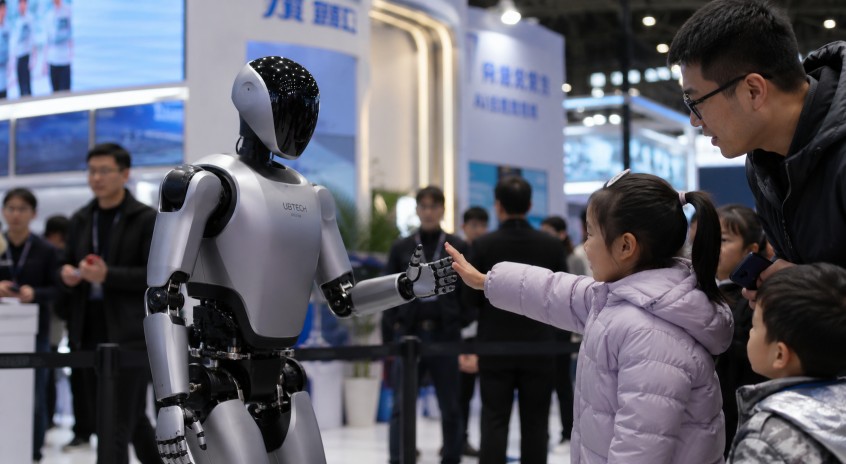
Initially, what seemed like an experimental venture has burgeoned into a vibrant robotics sector. Today’s Chinese robots are enhanced with artificial intelligence, which grants them the ability to understand their environment, make independent decisions, and cooperate with humans across various settings. These technological advancements have propelled robots from the confines of research facilities into practical roles in industries like manufacturing, logistics, healthcare, and public services, as well as everyday life.
The deployment of these intelligent machines is aligning with China’s strategic goal to foster “new quality productive forces,” a policy concentrating on technological innovation, enhanced productivity, and the development of high-quality industries. This initiative underscores the nation’s commitment to integrating cutting-edge automation into its economic framework, thereby reinforcing the significance of robotics in daily activities and economic expansion.
The swift advancements in the Chinese robotics industry underscore the country’s substantial investments in advanced technology. This commitment reflects an ambition to weave intelligent automation seamlessly into various industrial sectors, making robots not just tools of the future, but an integral component of current economic operations and life. As the capabilities of these machines continue to grow, they are becoming more vital to China’s vision of modernizing its industrial landscape and boosting productivity through innovation.