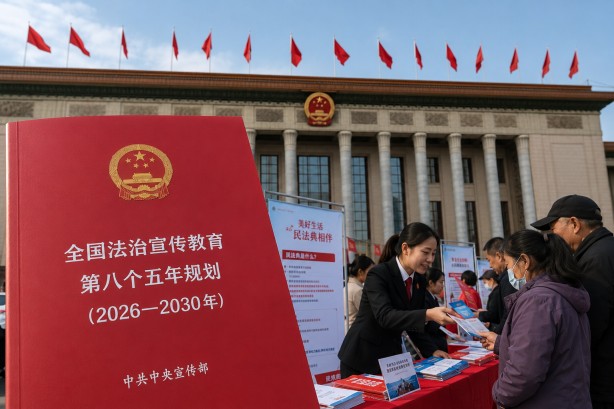
In an effort to bolster its modernization efforts, China has unveiled a new five-year plan covering the period from 2026 to 2030, which focuses on enhancing public legal education and reinforcing the rule of law. This initiative aims to elevate legal awareness across various sectors, including government officials and the general public, while ensuring that legal education becomes more institutionalized and standardized. By embracing technology, the plan aspires to transform legal education by the decade’s end.
A significant component of the plan is its concentration on educating citizens about specific legal areas that are crucial for the country’s economic landscape. Emphasizing laws related to the business environment, the private sector, and the digital economy, the plan aims to safeguard consumers and investors alike. Additionally, intellectual property rights and financial regulations are highlighted as key areas where increased legal knowledge is deemed necessary.
The initiative further delineates a focus on enhancing understanding in critical international arenas. It addresses legal issues concerning foreign trade and cross-border investments, aiming to prepare citizens for the complexities of international commercial disputes. By doing so, the plan seeks to equip individuals with the legal prowess needed to navigate global economic interactions.
Environmental protection and personal data security also feature prominently in the plan, reflecting a comprehensive approach to legal education that extends beyond traditional sectors. Furthermore, the prevention of telecom and online fraud is singled out as a crucial area for legal awareness, highlighting the increasing importance of safeguarding digital interactions in an interconnected world.