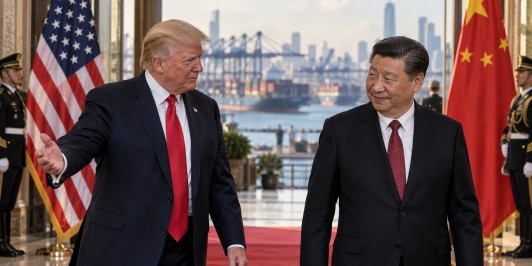
In a climate marked by trade tensions and strategic competition, Chinese President Xi Jinping has commenced a state visit to the United States, a move highlighting the ongoing diplomatic dialogue between the two economic superpowers. The visit was punctuated by an elaborate reception at Joint Base Andrews, where U.S. President Donald Trump and First Lady Melania Trump personally welcomed Xi and his wife, Peng Liyuan, with military honors and a flyover by U.S. B-1 bombers.
The high-profile welcome underscores the significance of Xi’s visit, which aims to address pressing issues such as trade disagreements and advancements in technology. A notable development during this visit is the extension of the Busan agreement, a temporary trade arrangement between the U.S. and China. Announced by U.S. Treasury Secretary Scott Bessent, this extension will keep the agreement in effect until January 10, providing a continued pause on certain trade-related measures.
Trade remains a central topic as discussions during Xi’s two-day visit also encompass artificial intelligence and other technological advancements. The United States and China are both keen on maintaining their competitive edges in these areas, highlighting the broader strategic rivalry between the two nations.
In addition to formal meetings at the White House, the visit includes various official engagements aimed at fostering dialogue while managing economic and strategic differences. This state visit is a continuation of efforts by both countries to navigate their complex relationship, especially as they vie for dominance in sectors like artificial intelligence.
As Xi’s visit unfolds, the focus will likely remain on how Washington and Beijing can cooperate amidst their ongoing competition, with both sides seeking to leverage talks to mitigate tensions while exploring avenues for collaboration in technology and trade.