
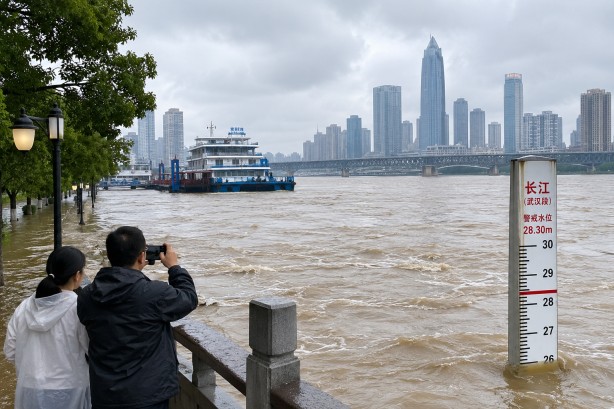
In central China’s Hubei Province, persistent heavy rainfall has led to a significant rise in the water level of the Yangtze River, particularly in the city of Wuhan. This increase has pushed the water level beyond the established safety threshold, prompting heightened vigilance among local authorities and residents. The Hankou monitoring station, a key point for tracking river levels, has recorded the water at 25.11 meters, which is 0.11 meters above the official warning level.
As rain continues to fall, officials are keeping a close watch on the situation, aware that further precipitation could exacerbate the risk of flooding in the region. The possibility of additional rains leading to dangerous conditions has made it imperative for those living in potentially affected areas to remain alert. Authorities are prepared to issue safety advisories should the situation worsen, urging the community to heed these warnings promptly.
Recent weather patterns have underscored the vulnerability of regions along the Yangtze River to flooding, necessitating a robust response from local emergency services. The ongoing monitoring efforts are part of a broader strategy to mitigate the impact of natural disasters on the population and infrastructure.
Residents in Wuhan and surrounding areas have been advised to stay informed through official channels and to be ready to take precautionary actions if necessary. The local government has emphasized the importance of public cooperation in ensuring safety during such critical times. By maintaining a state of readiness, the community can better manage the challenges posed by the fluctuating river levels.
While the immediate focus remains on monitoring and preparedness, the situation also highlights the need for long-term strategies to address the effects of extreme weather events. As climate patterns continue to evolve, the resilience of cities like Wuhan will rely on both immediate action and sustained planning to protect against future threats.


