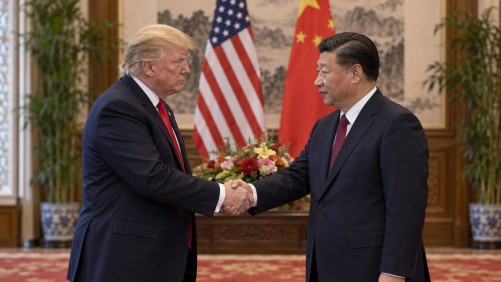
As global tensions simmer, the United States and China are set to engage in crucial talks aimed at addressing their ongoing strategic rivalry. US President Donald Trump and Chinese President Xi Jinping are scheduled to meet in the United States, marking their second face-to-face encounter this year. The meeting comes amid persistent disagreements over trade, technological advancements, and geopolitical issues, with both nations seeking to manage their complex relationship.
Artificial intelligence (AI) is expected to be a focal point of the discussions. The US has proposed establishing a dialogue mechanism with China to ensure AI safety and governance, reflecting growing global concerns about the technology’s potential risks. Meanwhile, China has expressed a desire for increased cooperation in AI development. However, the two countries have clashed over the issue, with the US imposing restrictions on China’s access to advanced semiconductors vital for AI, a move Beijing views as an attempt to stifle its technological progress.
Trade remains a contentious topic, with a temporary US-China trade agreement set to expire in November. This agreement currently includes tariffs and restrictions on Chinese rare-earth exports. While Beijing seeks a stable long-term trade relationship, Washington continues to use trade restrictions as leverage in negotiations, illustrating the challenging dynamics at play.
Taiwan is another significant point of tension. The US maintains strong defense ties with Taiwan, which China considers part of its territory. Beijing has consistently opposed US arms sales to Taipei, and future sales could further complicate relations between the two superpowers.
The upcoming meeting between Trump and Xi will also touch on broader international issues, including the conflicts involving Iran and Ukraine. China’s significant economic ties with Iran and its continued relationship with Russia add layers of complexity to these discussions. As both nations navigate their strategic rivalry, maintaining open lines of communication on global trade, technology, and security is crucial.